Monday, 25 April 2016

Borderlands

English Bluff Rd – Google Street View
10 English Bluff Rd. It’s a pretty standard two-storey suburban house on a pretty standard suburban street. The asphalt is in okay condition although is a little pockmarked. Maintenance is probably not high on the agenda, given the little traffic this end of the road receives. On one side, number 10 is bordered by Georgia Wynd, another like suburban street, greenery-lined and rather verdant. But on the other side, there is something that makes number 10 unlike almost any other suburban house in the world. You see even though English Bluff Rd is termed a “road”, it is not actually a thoroughfare.

Number 10 sits at the end of English Bluff Rd, but there is no geological reason that prevents it from continuing on its way to numbers 8, 6, 4 and so on. There is no cliff, no hill, no unfordable raging torrent, no insurmountable topographical feature, just a strip of foot-tall concrete kerbing – painted yellow – and a yellow and black checked diamond sign atop a no parking sign. Next to all this is another small sign:

WARNING!
If you are entering the United States
without presenting yourself to an Immigration Officer,
YOU MAY BE ARRESTED AND PROSECUTED
for violating U.S. Immigration and Customs Laws.

English Bluff Rd can go on no further because of a political obstacle, an invisible line drawn arbitrarily across the Tsawwassen Peninsula along the 49th parallel by men of two nations in dispute over two centuries ago. Here the Americas were divided by the British and the United States, today forming the border between British Columbia, Canada and Point Roberts, Washington, USA. And while there are plenty of border crossings between the United States and Canada across this imaginary line, there is none quite like the one at the end of English Bluff Rd.

The Oregon Treaty of 1846 extended the boundary between what would become Canada and the United States along the 49th parallel from the Georgia Strait all the way east to the Rocky Mountains. The 49th parallel cut right across the southern tip of the Tsawwassen Peninsula and while an agreement was met between the parties to bend the border around the southern part of Vancouver Island – keeping that island entirely in British territory – such an accommodation was not made for the tip of the Tsawwassen Peninsula.

This southern tip fell below the 49th parallel and as per the Oregon Treaty, became part of the United States. Thus Point Roberts became what geographers term a practical exclave; a part of the USA reachable by land only via Canadian roads. Indeed it's much closer to downtown Vancouver than the nearest major US town. But this doesn't stop the school buses full of US school children from getting a US education. They travel every day over the border into Canada and re-enter the United States at Blaine, before reversing the journey in the afternoon. Similarly, Canadians pop across the border to buy cheaper petrol, groceries and consumer goods where US retailers won't ship to Canada.

The portion of the Tsawwassen Peninsula that falls below the 49th parallel is only 3km from north to south and about 5km east to west. The total area of this tip of America is only 12.25 km2, an area roughly equivalent to Melbourne's CBD and immediate inner suburbs.

To an ausländer, this border and its polite sign is truly bizarre. Like many, I am used to seeing images of the Mexican border in pop culture: a frontier no-man’s-land that Donald Trump wishes to turn into a modern concrete and iron curtain.

But here in Point Roberts, this most fortified of national borders is little more than a few feet of concrete and a sign. No barbed wire, no land mines, no watch towers.

Or so it would appear.

There is more to this border points than meets the all-seeing Street View eye. While the end of English Bluff Rd where Canadian asphalt meets the 49th parallel may look like little more than an gentle barrier, technology makes it more fortified than ever. The modern surveillance panopticon means there can be eyes on the ground even when there are not actually eyes on the ground. They might be cameras on poles or even in trees, but somebody is always watching. 

Even pressure sensors are said to line the border, making this invisible barrier a barrier that is truly invisible. A simple jump across any of these deceptively empty strips of land may likely result in a prompt visit from US Border Patrol, helicopters blaring overhead. Just because the overt symbols of surveillance and control aren’t there, doesn’t mean they’re not watching.

It's this security that makes Point Roberts one of the most curious gated communities in the world. In addition to its cheap (for Canadians) petrol, it's apparently a regular home for those in US witness protection programmes.

There are plenty of US/Canada border towns, all of them more secure than a cursory glance might suggest. In Abbotsford, British Columbia, two roads run side-by-side, each adorned with a slightly different yellow line marking, for one is in Canada and the other in the United States. All that lies between them is the legacy of history and a 2-foot-wide strip of grass.

Stanstead, Quebec is another, sitting right across from Derby Line, Vermont. For decades, these two towns have spread geographically with little regard for the imaginary line of long-dead statesmen. The towns’ library and opera house was built straddling the border, so that citizens of both sides could use it. Likewise families and friends built lives with little regards for the map. Neighbours would share a lawnmower or beer, even if there did happen to be an invisible line bisecting their lives.

For years, this was how things were, but in the surveillance era, even casual transgressions of the line are not permitted. The painted line on the road is no longer a symbolic line, but an enforced division. US Border Patrol monitors the streets, having blocked off a number of “unguarded” roads. The US border authorities call the Stanstead/Derby Line region a “unique challenge” – that’s law enforcement parlance for “we’re cracking down and cracking down hard because terrorism”.

It makes me wonder, if Australia had land borders, what would they be like? Despite our secure island geography, Australians are inordinately afraid of the “other”. How Australians enforce their maritime borders might provide an idea of how we would enforce our hypothetical land border.

I think it would be fair to say this imaginary border would bear more resemblance to the USA’s Mexican border than its Canadian border. No small signs asking you to go the long way around to “present” yourself to a member of Dutton's Team Border Force.

Instead I imagine dogs and razor wire and landmines and watch towers, like a scene from a Cold War thriller set in Berlin. "Saving lives at sea" could no longer be used by conservatives as a rationale for strong borders, so some other notionally palatable reason would have to be found, perhaps saving them from being very tired after a long walk. All supported, naturally, by a taxpayer-funded telemovie warning of the perils of coming by land to Australia.

And we’d probably make Indonesia pay for it.

Wednesday, 23 March 2016

CSIRO Climate Science Community Forum

(L–R) Dr. Kathy McInnes, Prof. Will Steffen, Prof. Ian Chubb, Mark Dreyfus QC MP, Senator Kim Carr


On March 22nd, I attended a community forum held by the federal member for Isaacs, Mark Dreyfus QC discussing the importance of CSIRO’s climate research, particularly in light of management’s planned cuts to climate programs.

Presenting to the large assembled audience was former Chief Scientist of Australia Professor Ian Chubb, internationally-renowned climate scientist Professor Will Steffen, lead author on the IPCC Special Report on Extremes and CSIRO Marine and Atmospheric research scientist Dr. Kathy McInnes, and Labor’s shadow minister for research and innovation Senator Kim Carr.

The location was particularly appropriate for a number of reasons. Firstly, the CSIRO Marine and Atmospheric research department – one of the departments to be most directly affected by the planned job cuts – is based at the CSIRO’s Aspendale site, located within Mr. Dreyfus’s electorate. But the area is also among the lowest-lying on Port Phillip. Should the planet continue to warm, a sea level rise of 80cm would leave thousands of homes in the area susceptible to surge inundation. Unfortunately, 80cm is now at the lower end of sea level rise expectations, with 1m looking to be the more likely outcome. This is not baseless conjecture, this is based on the modelling and data generated by those at the CSIRO Aspendale site, such as Dr. McInnes.

In brief, all members of the panel are against the proposed cuts. There is a general sense of disbelief among CSIRO Marine and Atmospheric staff, as well as within the broader community. One key message repeated by many of the key speakers was that science expertise is not like tap. Once it is turned off, it cannot be turned on again, at least not within a reasonable amount of time. The inevitable brain drain instigated by these cuts is compounded by the low levels of secondary students undertaking VCE-level sciences and maths – the lowest numbers in 25 years. This is a crisis that will take a generation to resolve, assuming proper measures are put in place to reverse them. It is very unlikely a Coalition government would do this, preferring to be fixated on school chaplains and anti-bullying programmes that dare mention homosexuality.

Mr. Dreyfus spoke on the importance of science research to the future of Australia, paying special attention to CSIRO’s Marine and Atmospheric team, as the Aspendale site falls within his electorate. He also made mention of the important work CSIRO has done over the past decades across many fields, emphasising the need for scientific research to be a national good and not just driven by commercial imperatives, as the current management seems hellbent on doing. That oft-cited CSIRO invention, high-speed Wi-Fi, did not come about because a private company wanted a dot matrix printer and a floppy drive to communicate with one another. No, it came about because of "a failed experiment to detect exploding mini black holes the size of an atomic particle". Science cannot be directed, it can merely be funded.

Professor Chubb delivered a brief history of the CSIRO and its antecedents, placing the importance of its work in context. A key part of this context is how the research environment has changed since CSIR was first established in 1916. Back then, universities were not required to undertake research.

Although many did, university research constituted a small proportion of the research undertaken in Australia. Most was done by the CSIR and later, the CSIRO. But since the late-1940s, this has changed. Universities, to maintain the right to the name “university”, had to undertake research.

Today, a great deal of research is undertaken by universities, with the end result of CSIRO sometimes competing for the same funding as universities. While competition is not necessarily destructive, Professor Chubb argued that only CSIRO is placed to undertake long-term scientific research, with universities often limited to 3, 4 or 5 years funding. Changes to this funding can be damaging.

On an interesting note, Professor Chubb is known for his ability to work with governments of all political persuasions. Appointed by a Labor government, he remained Chief Scientist until his term expired under the current Coalition government. During the Q and A portion of the evening, Fairfax journalist Tom Arup asked Professor Chubb about his tenure as Chief Scientist overlapping with the appointment of Dr. Larry Marshall to CSIRO. Professor Chubb, ever the diplomat, was non-committal on the appointment, but did say he had spoken to Dr. Marshall about the cuts. Professor Chubb said that the details of this conversation were “best left between consenting adults”.

Senator Carr spoke about the recent Senate inquiries and the apparent problems within senior CSIRO management, including reports of Land & Water staff walking out of a meeting with Dr. Marshall, led by the division’s head, Paul Hardisty. Senator Carr said that, if elected, the opposition would instigate a review in CSIRO’s management structure. He also made reference to internal documents showing the initial number of cuts considered was substantially larger. Asked in the Q and A section when Labor will release a science policy, Senator Carr responded that it would be at some point during the “long” election campaign.

Professor Steffan gave an overview of his research career, during which he has been engaged by governments and agencies in Australia and around the world. He highlighted the fact that the science of climate change is itself rapidly changing, with new data altering modelling for future outcomes. The most complete and recent sea rise modelling was released in 2015, he said, but will be out of date within two years. CSIRO climate scientists contribute a considerable amount of this data.

Rounding out the evening, Dr. McInnes gave an overview of her research at the Aspendale site, particularly into sea level rises. The data produced by her and her team have been used by local, state, national and international bodies for various purposes, such as planning decisions. These, she argued, are very practical uses of climate data that affect us all. The provision of this data may be affected should the planned cuts go ahead.

Science is vital not only to Australia’s future, but to the world’s. The insurmountable problems of tomorrow will not be surmounted by budget surpluses, school chaplains or a star chamber-inspired industrial relations commission. They will be solved by science. The planned cuts have earned the ire of almost every climate scientist around the world and earned Australia the dubious honour of the New York Times editorialising against the proposed cuts – with an insipid defense of the cuts and Australia’s place in the scientific community by the new ambassador to the United States, Joe “Age of Entitlement” Hockey.

The panel was asked by an audience member what the ordinary person can do to oppose these cuts. Professor Chubb observed that politicians respond to the public will. He said the public must be made to care about these cuts and once they do, politicians will have no choice but to respect science. I plan on doing my part, you should too. Come along to the Rally to Save CSIRO Jobs in Melbourne on April 2nd. I’ll see you there.

Tuesday, 23 February 2016

Bad Science: Catalyst's Radioactive Waste Dump on Reason

ABC Catalyst's fear-inducing "radiation" absorption of a child's face is little more than a heat map – Source: ABC
It began like an A Current Affair story into 'Australia's Dodgiest Builder Who Cons Retirees Out of Their Life Savings by Posing as an Injured Person While on Welfare'...
You can't see it or hear it, but wi-fi blankets our homes, our cities and our schools...
 Our SCHOOLS? But...but...the Children!?
Dr Devra Davis: Children today are growing up in a sea of radiofrequency microwave radiation that did not exist five years ago...  
Cell phones emit pulsed radiation...
"Our" safety agencies don't reckon there's a problem with this dangerous sea of Wi-Fi pulsing and throbbing THROUGH our children, we're told, but:
some of the world's leading scientists and industry insiders are breaking ranks to warn us of the risks.
THANK YOU "leading" experts for being brave enough to come forward! I HAVE NO IDEA who or what would be stopping you from doing so otherwise, I guess the others are in league with Big Wireless or something, but THANK YOU for being so BRAVE!

Sadly this wasn't 6:30pm schlock on the commercial networks, it was Catalyst, once Australia's premiere science program, now run purely for ratings and controversy. This loaded use of language from the first thirty seconds of the programme was (literally) just the beginning. Viewers were conditioned at almost every point reject the opinion of our safety agencies (and mainstream scientific consensus because, I dunno, conspiracy or something) and accept the scary things the fringe researchers are saying because CHILDREN, damn it. DO YOU WANT YOUR CHILDREN DEAD FROM CANCER?

After watching the episode and reading through the transcript for this piece, I've had to prevent myself from rebutting line-by-line the nonsense peddled by some of the alleged 'experts'. You can find comprehensive and accurate rebuttals here, here and here. But the gist of it is this: Catalyst devoted the majority of this episode to promoting harmful effects of electromagnetic radiation, effects that are rejected by mainstream science and our fundamental understanding of radiation.

It is not my goal to go tit-for-tat on the claims made in the episode – it was a very bad episode of Catalyst and is the final nail in the coffin for the show as far as I'm concerned – but I do want to discuss the average person's strange relationship with science.

Cognitive Dissonance (no, it's not a form of deadly radiation)
Whether we realise it or not, science forms the basis of entire lives. From your alarm clock to your breakfast cereal to the milk in your coffee to the ignition of your car, all exist today in their current forms because of the knowledge science has provided us and continues to provide us with.

To take just a single example, look at a GPS navigation unit. You have the technology of the device itself: (liquid crystal display, touchscreen, microprocessors, memory, miniaturised componentry etc), the manufacturing process of the device (computerised global supply chains, global shipping, automated fabrication systems etc), the 3–4 satellites which calculate your position through trilateration, and then, underpinning it all, Einstein's Theory of Relativity. Believe it or not, but without proper application of relativity, GPS would be useless within 2 minutes. As lay people, we might not be familiar with the theories underpinning the functionality of the GPS, but we accept that someone somewhere has worked it out far better than we ever could.

Contrast this with radiation. The very word is prejudiced. But it's actually quite a simple concept: radiation is energy that goes from one place to another, with an associated electric field and magnetic field, also known as electromagnetic waves.

The Electromagnetic Spectrum – Source: CDC

In physics classes, you probably remember it as a spectrum. At one end, you have weaker low frequency, longer wavelength radiation, through to visible light, then stronger higher frequency, shorter wavelength radiation. These weaker forms of radiation are known as non-ionising radiation , while the stronger forms are ionising. In short, it's ionising radiation that is known to damage cells, while non-ionising radiation lacks the power to do so. It's non-ionising radiation we find in many of our appliances at home, from microwave ovens, cordless phones, mobile phones and, yes, Wi-Fi routers.

All the devices mentioned in the episode of Catalyst – mobile phones, Wi-Fi routers, cordless phones, tablets, microwaves etc – generate a comparatively tiny amount of low-energy non-ionising radiation. After quite a few decades of devices operating at this frequency (usually around 2.45ghz) there's little in the epidemiological record to indicate an effect on humans. This is the crux of the issue and why the World Health Organisation, after reviewing some 25,000 papers on the matter, found that "despite extensive research, to date there is no evidence to conclude that exposure to low level electromagnetic fields is harmful to human health".

That said, non-ionising radiation does affect the body. It might not be powerful enough to damage cells, but it does leave its mark by way of heat. When you sit outside in the sun, you feel warm because the non-ionising radiation from the sun (visible light) is acting on you by warming you. Unfortunately, sunlight brings with it ultraviolet light which is damaging. Sit out in that for too long without protection, and you've got sunburn – ionising radiation acting on and damaging your cells.

There is also preliminary evidence to suggest that non-ionising radiation does have some other yet-to-be-discovered non-thermal effects. This has been leapt upon by anti-radiation activists to demonstrate that Wi-Fi devices are indeed dangerous and "mainstream science" is yet to catch up. But the research is at such an early stage and the alleged effects so minor that it is extremely unlikely to cause cancer in the way these proponents claim.

The Rise of Big Telco, Coming to Kill Your Children
My goal here is not to go on about radiation (although I do love it), but rather to demonstrate it is something scientists have studied for a long time and have a pretty good idea about. We know ionising radiation can harm humans because we have studied exposure and seen the results. Just as I am content to leave relativity to the physicists, so too am I content to leave radiation to physicists who understand the practice and the theory in far greater detail than any of us could possibly hope to. Couple these experts with the oversight of national and international governmental and non-governmental regulatory agencies and you've got a pretty good setup for a safe world with safe products. Of course, humans being humans, things aren't always perfect, but the worst is usually averted.

Going back to climate change for a moment, who among you has ever read a scientific paper on climate change? I bet hardly any of you have. I know I haven't. Instead, we've read interpretations of that data written by scientists and science communicators for lay audiences. Take the IPCC: they produce an assessment report every few years based on the most up-to-date science on climate change. The most widely-read section of that report is the Summary for Policymakers, which explains most of the assessment in plain English (an even more concise 2 page summary is also available for the time-starved). Reading the raw data that underpins the conclusions simply isn't an option for most of us.

Yet most of us "accept" climate change as a thing that is happening. Sure, we're divided on what and how much to do about it, but only a lunatic fringe entirely doubts its existence (such as our erstwhile Prime Minister's chief business advisor who called climate change a UN conspiracy for a new world order). Most of us accept the science. Yet the same people who accept the science on climate change, relativity and other sciences fundamental to our everyday lives charge national standards  organisations, such as our own ARPANSA, as being in league with "Big Telco" on some conspiracy to conceal the alleged dangers Wi-Fi routers and mobile phones pose.

Thinking of the Children
This is the difficult position scientists in all disciplines find themselves in these days. They are having to re-explain the fundamentals they thought were settled years ago by Pasteur, Curie, Röntgen, Planck, Hertz or any other number of researchers to an audience that barely grasps high-school level English, let alone physics, biology or chemistry. But because this audience read something on GuiltyMommy.com or HuffPo, sources that regularly end up on mass media outlets, science must indulge their ignorance.

Imagine, for a second, if Catalyst ran a story on global warming that promoted the views of Christopher Monkton above those of James Hansen? Or if they broadcast a space special devoted to promoting a moon landing hoax? There would be understandable outrage. In the case of Wi-Fi and cancer, perhaps the content was not so inflammatory, but it does plant a seed of doubt in people's mind that does not need to be there in the first place.

But this isn't just about Catalyst, it's about a general scientific illiteracy in an era where science has never been more important. If we are to overcome the struggles of life in the 21st century, we are going to need science firing on all cylinders: agriculture, healthcare, power generation, manufacturing, resource management...the list goes on...and not indulge the paranoid fantasies of an illiterate few. In fact, if we are to give our children the best possible future, as the Wi-Fi Fearmongers and others claim is one of their main causes, we're going to need every weapon in the technological arsenal to overcome mankind's own stupidity and selfishness. Otherwise low-level non-ionising radiation will be the least of their worries...

Saturday, 2 January 2016

Politics and Intergalactic Relations, 3rd Edition


The Nazis on the Death Star First Order on Starkiller Base

>>Achtung! Here be spoilers<<

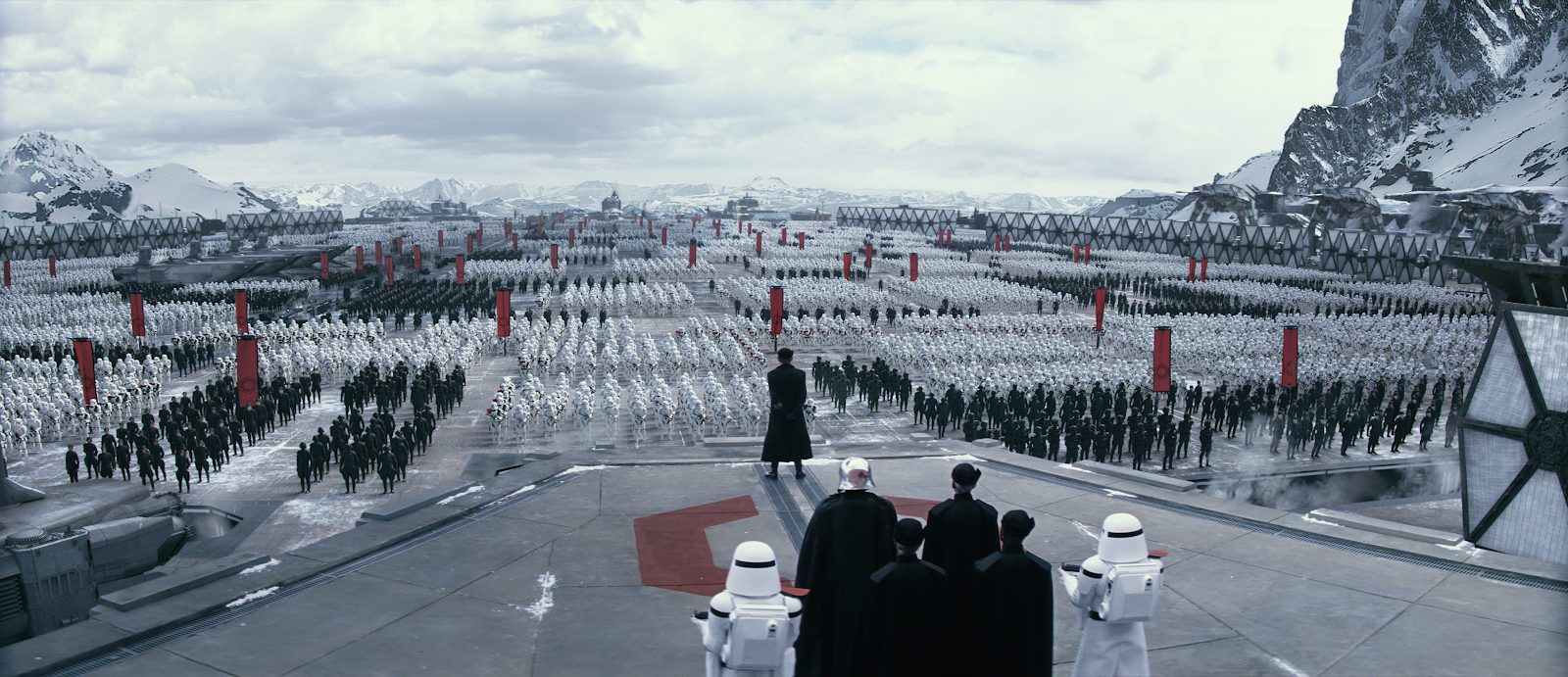
Viewers of Star Wars: The Force Awakens will leave the theatre with many questions: what occurs immediately after the credits roll? Is Rey a Skywalker? Will there be redemption for Kylo Ren? What the shit is a Snoke and why is he a 20ft-high hologram? Why does C-3PO have more expression on his face than Carrie Fisher?

These are all valid questions, however I left the theatre most bewildered about the state of political affairs in J.J. Abrams’ new galaxy. When we last saw our heroes at the end of Return of the Jedi, Emperor Palpatine was deposed with extreme prejudice, Darth Vader redeemed and the mighty Empire in disarray.

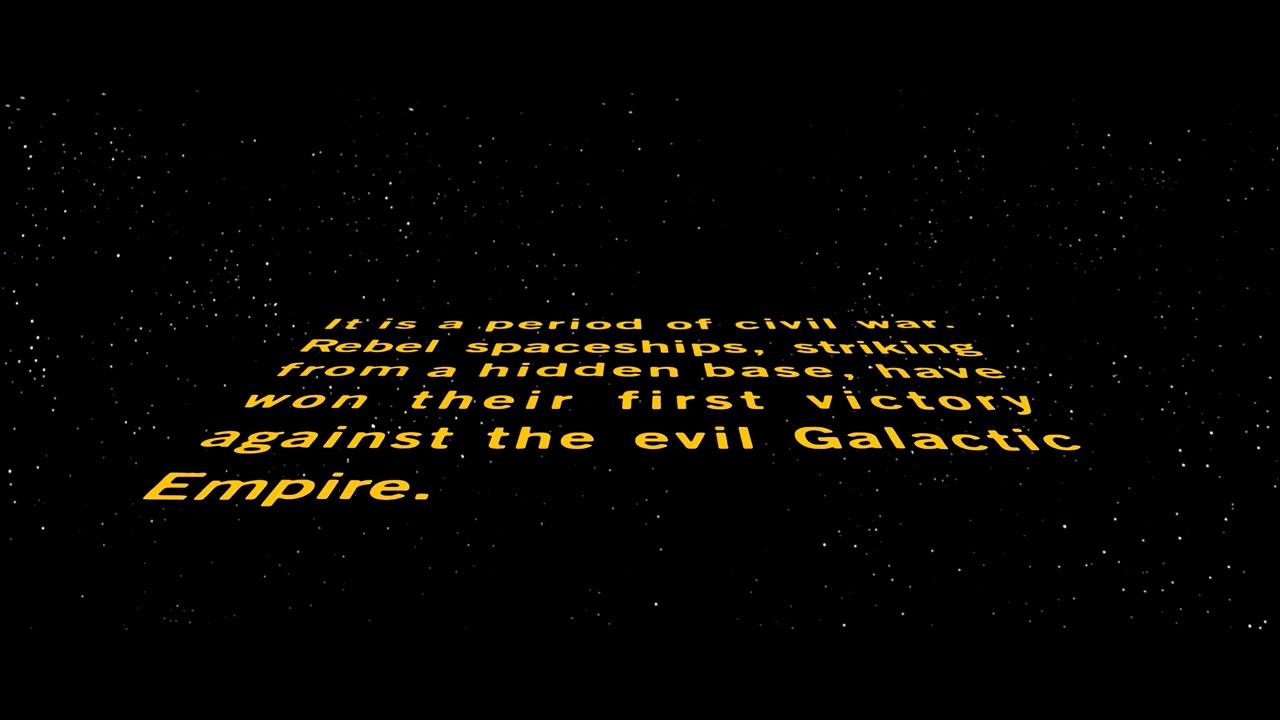
It was assumed, as had occurred in the now-jettisoned expanded universe, that the Rebel Alliance to Restore the Republic (to give the Alliance its formal name) did in fact become the New Republic. The opening crawl to The Force Awakens says as much. So far so good. The First Order, the new film’s surrogate Galactic Empire, can safely be assumed to be one of the many remnants of the Empire vying for control of the galaxy. Fine.

But why is the now General Leia leading a “Resistance”? Surely she should be leading a New Republic army against the First Order, rather than a rag-tag proxy Rebel Alliance with new X-Wings and helmets? This is confusing. If anyone could be classed as a resistance in this story, it’s the First Order resisting the New Republic.

The politics of the original trilogy (and even the maligned prequels) were pretty straightforward. It was the EVIL GALACTIC EMPIRE against the plucky Rebels; a tough Princess pursued by the “Empire’s sinister agents”. In the prequels, the political arc was the fall of the Republic and the rise of the Empire, comprehensible if clumsily plotted by George Lucas (like how by the end of Revenge of the Sith, the Republic is suddenly the Empire, with TIE-sounding spaceships, Imperial uniforms and their very own Grand Moff Tarkin even though this vital character had not been glimpsed at all in the prequels – lazy plotting and lazier writing attempting to squeeze too much into too short a time....oh and they're building the Death Star...apparently that took 19 years to build. Union disputes, Lucas "jokes" in the DVD commentary. I say "jokes" because Lucas is clearly devoid of anything resembling a sense of humour...but I digress).

This is also the entire plot for Rogue One

But I have no idea where we find ourselves in The Force Awakens’ galaxy and what effect the actions of our protagonists and antagonists have on the intergalactic political status quo. Like when the Death Star III Starkiller Base destroys a planet that looks suspiciously like galactic capital Coruscant (but apparently isn’t), it’s very difficult to tell whether that’s the entire New Republic gone. Conversely when Luke Skywalker Poe Dameron flies down the Death Star Starkiller Base trench and destroys it by firing torpedoes into its One Fatal Weakness™, is that the end of the First Order? Presumably not, although it’s not as if the First Order appeared to have a heap of starships in orbit around Starkiller Base. The fact is that the scope of both the New Republic and First Order is almost completely unknown. Perhaps this is for the best, leaving writers of future installments (and the all-important tie-in books) maximum wriggle room, but it’s also frustrating given the foundation of the Star Wars saga as a “Good vs. Evil” story.

It’s difficult to believe that the destruction of the Coruscant-like planet, capital of the New Republic or not, would spell the end for that government. A space-faring administration would surely find it quite easy to ensure continuity of government by spreading out vital services like the Space Police Force, Space Army, Space Medicare and Space Centrelink over several star systems, but General Hux’s fevered Hitleresque speech, announcing the end of the "illegitimate" Republic, would indicate otherwise.

For me, the destruction of this Republic planet (referred to as the Hosnian System) doesn't carry much weight in the film. Sure, it's apparently an important place, but it's difficult for viewers to relate to what is going on. When Tarkin ordered Alderaan destroyed in Star Wars, it carried emotional weight – it was Leia's home planet and the home of peaceful people who did not deserve a planetary genocide. Viewers know nothing of Hosnian Prime, except that it had something to do with the Republic and was probably its capital. The middling responses from our lead characters to this event don't add much weight to it at all.

My bet is there’s more to this universe than meets the eye. Abrams and fellow screenwriters Lawrence Kasdan and Michael Arndt are steeped in the Star Wars universe. They know what makes it tick and what makes sense in its internal logic. There are no doubt deeper reasons to why the Republic may or may not exist any more. Perhaps they demilitarised after the end of the Galactic Civil War, leaving Leia one of the few former Rebels who recognises the necessary evil of an army. Perhaps like a reluctant superpower, the New Republic provided only basic support to the Resistance, as more earthly superpowers often do in the real world when they don't want to get their hands dirty.

The more committed Star Wars fans among you will no doubt be able to point out that some of these questions are answered in the novelisation/graphic novel/young adult novel/trading card series/colouring book/inflatable beach ball. A preliminary interweb search does indeed indicate much is explained in Alan Dean Foster’s novelisation of the film and in an assortment of tie-in books (like DK’s Visual Dictionary), but it still leaves the vast bulk of casual viewers in the dark who won’t purchase let alone read the 1001 tie-in books, games and cereal boxes.

Regardless of the finer details of this universe, I think it’s kinda refreshing to watch a Hollywood blockbuster where not much is explained at all. Although it doesn’t come close to replicating the disorienting unfamiliarity audiences must have felt thrown headfirst into this world in 1977, it's nice that the action and quieter moments aren't subsumed with blatant exposition beyond what is needed for the plot.

I look forward to finding out more about this new Star Wars universe as more of the story becomes available. I guess that’s one of the reasons I love Star Wars so much: it’s not just three good films, but a rich tapestry of media including some of the best novels and video games in the genre. Although all that is now gone down the memory hole, we can look forward to experiencing a whole new Star Wars universe and great stories it will bring.

Tuesday, 20 October 2015

Star Wars Episode VII: Return of the Movie Title

Star Wars: The Force Awakens banner image based on the theatrical poster – the first time photography has been used for a main theatrical release poster of a Star Wars film, and the first time I can recall a banner configuration being widely distributed because internet.

If you were on the internet today, you may have noticed the release of the (probably) final trailer for the latest instalment of the Star Wars saga. This coincided with the worldwide release of pre-release cinema tickets that caused many a ticket sales server across the globe to crash (I'm looking at you, IMAX Melbourne!!). Although advanced bookings are nothing new for popular films, this is the first instance I can recall it occurring on a global scale. No mean feat.

The trailer was impressive, most impressive. Lifetime Star Wars fans like me no doubt got a little emotional with the whole thing. The thought and precision that goes into trailer creation to elicit responses in an almost Pavlovian manner is actually quite terrifying. But what intrigues me the most is how the episodic titling of the prequel Star Wars films has been eschewed in favour of an actual film name. Except for occasional mentions in the press and among fans, almost nobody associated with the new film has referred to it as "Episode VII". It is The Force Awakens. This is a very good thing.

The godawful prequel trilogy with their godawful subtitles (The Phantom Menace, Attack of the Clones and Revenge of the Sith) were almost always referred to by their episodic titles, probably in part because their official names were better suited to a 1950s B movie or Scooby Doo episode than a multi-billion dollar blockbuster. This generic naming essentially robbed the prequels of their individual identities (as if they didn't have enough creative handicaps to overcome), unlike the three original films which are almost never referred to by their retroactive episodic titles. 

The Empire Strikes Back, for instance, is an incredibly powerful title that remains a pop culture staple and demonstrates that sequels don't need need to be named [original film] 2. Likewise with Return of the Jedi. The Force Awakens' creators and marketers clearly recognise this and are trying to establish an individual identity for the new film and its sequels, avoiding association with the prequels in name if not in narrative. 

I'm pretty giddy with excitement for these new films. After the disgrace that was the prequel trilogy, I assumed we'd never get to see another new Star Wars release on the big screen. Happily, I was wrong.  Although, I must temper my excitement with the memory that even The Phantom Menace's trailers were awesome. Again, I doff my hat to the trailer people for making even that unintelligible piece of cinematic shit seem exciting. It is with a certain degree of joy I note The Force Awakens' theatrical poster neglects even a passing mention to George Lucas in its credits. This is a very good thing. 

Monday, 19 October 2015

My Kingdom for a Keyboard


Apple announced updates to its iMac lineup this week, along with an overhaul of three of the brands most venerable pieces of hardware: the Magic Mouse, Trackpad and Keyboard.

These three peripherals have always represented Apple's myopic pursuit of design at the expense of usability. None of them (with the possible exception of the Magic Trackpad) is better than what other manufacturers have on offer.

The Magic Mouse, for example, eschewed buttons as we know them and instead employed a touch-sensitive surface designed to replace them old-fashioned button things. Great in theory, but in practice it sucked. Using Google Maps or a similar page in a web browser usually resulted in unwanted rapid zoom-ins and zoom-outs as the mouse detected a scroll command that never was.

The Magic Trackpad goes okay in most regards, however it is very sensitive and, like the mouse, can often trigger gestures you did not intend. And, as a Photoshop user, a trackpad is no substitute for a mouse or tablet. That said, Apple's implementation of the trackpad is the best in the market and a pleasure to use most of the time.

But the worst (or best?) example of Apple's nearsighted pursuit of design for the sake of design is the Apple Keyboard — the worst-designed Apple peripheral since the infamous Apple USB Mouse (M4848), known derisively as the "Hockey Puck".

In an age of touch-enabled devices, the humble keyboard remains the most practical and important human interface device for computers. The vast majority of all computerised communication is carried via letters and numbers entered by fingers on keys, therefore the comfort and productivity of the typist should be of the utmost concern. Unfortunately, Apple — like almost all computer hardware manufacturers — have set themselves on a road to mediocrity with the design and usability of their keyboards.

Keyboards used to have bite. They used to announce their presence via the unmistakable clickety clack of mechanical switches. But this was not noise for the sake of noise, mechanical switches provide the best possible typing experience, with a good amount of travel (the distance a key must be pushed down before the keystroke is recognised) and a positive tactile response, that is to say the user knows when a key is hit and can move on to the next keystroke. These two properties, among many, make mechanical keyboards easier to touch-type on, which is why they are preferred by typists the world over.

Unfortunately, the mainstream computer world has largely abandoned mechanical keyboards in favour of rubber domes and other less tactile mechanisms. Apple's last mechanical keyboard, the Extended II (on which this post is being clickety-clacked) was discontinued in 1995 and now mechanical keyboards are largely the domain of gamers, usually tricked out with custom LEDs and a thousand-and-one programmable custom function buttons. "Features" which your average keyboard user doesn't need.

Yes, "design"
Apple's new "Magic" Keyboard utilises all-new scissor switches for its keys, similar to the previous Apple Keyboards and MacBook mechanisms, but with even less travel. At first type, this makes it quite difficult to touch-type on. It is important to note that this new keyboard does not use the butterfly mechanism of the new MacBook – a mechanism that provides so little travel and tactile response that one reviewer wanted "to cry a little", but it is not much better. While the size and design constraints of the ultra-thin MacBook make its keyboard a necessary evil, there is no such excuse with a desktop keyboard, other than the elevation of form over function. Sadly, using the new Magic Keyboard is not that different from the miserable experience of typing on a touch screen.

Happily, the Magic Keyboard does address a number of design issues from previous models. First, the keyboard is now a solid wedge shape, not a thin aluminium sloped casing with little support underneath (although Microsoft could be forgiven for being a little pissed at this). I have a collection of bent and battered aluminium Apple Keyboards, victims of close-run essays and reports.

The keyboard (along with the new trackpad and mouse) also contains an in-built rechargeable battery that can be charged via a Lightning cable (included). This is pretty neat, although it's another USB port that needs to be used on a computer where ports are already at a premium. At this point, I'd like to see an iMac with an integrated Lightning cable, but that in itself would offer its own design problems.

Apple's quick to claim the environmental high ground on its new peripherals with the use of batteries, rightly claiming it reduces use of alkaline batteries that would otherwise end up in landfill. But it also limits the life of the product with the integrated battery not replaceable by the user. Also, anyone who has owned and used the previous iterations of these products would be unlikely to persist with the Sisyphean task of using alkaline batteries – non-rechargable lithiums and rechargeable Ni-MH batteries were a mandatory part of every sale in my time in computer retail.

Still, with all these design goodies, the typing experience has been solely neglected, leaving touch typists to fend for themselves in a world of illuminated gaming keyboards that look more like offensive weapons and are named accordingly (Razer BlackWidow Ultimate, anyone?). This is why I persist with my Apple Extended Keyboards – arguably the best keyboards ever made – acquiring them in all conditions at all times, along with the USB adaptors required to operate them on modern machines.

Apple Extended Keyboard (front) and two Apple Extended Keyboard II
So what are the modern options? Sadly, unless you like your keyboards black and illuminated, there aren't too many options. For Mac users, the best alternative is one of the Matias Tactile series – they bill the Tactile Pro as the spiritual successor to the Apple Extended Keyboards. But good typing doesn't come cheap, a Tactile Pro will set you back over AUD$200 locally, so start saving your cents. You can still sometimes pick up a bargain on eBay by searching for vintage Mac equipment, although listings for Apple Extended Keyboards are both rare and usually expensive. It pays to search simply for vintage Macs that include a keyboard – often that "keyboard" is an Apple Extended Keyboard. Of course you will need an adaptor to get it up and running, but it's well worth it.

What I would really love to see is an Apple mechanical keyboard on the market again. A keyboard with all the nice design of current Mac hardware, but with the added benefit of being usable. A wireless mechanical keyboard with a similar footprint to the new "Magic" keyboard is not impossible. Perhaps call it the Apple Keyboard "Pro" or something. The problem is that as computer users, we have become habituated to mediocrity. We don't think of the keyboard interface as something that should be satisfying or even pleasurable, merely something that is just adequate. Most of us don't know there is something better out there – a keyboard that makes even the most arduous data-entry tasks strangely satisfying. A better keyboard makes us better typists and therefore better communicators. Would it be too much to suggest that a better keyboard makes us better people? Maybe. But you'll never know unless you try.

Tuesday, 29 September 2015

Tear down this wall...

Berlin Brandenburg barriers in use at Berlin Tegel Airport in 2014
...and rebuild it to legal standards.

Berlin's ill-fated Brandenburg Airport has hit yet another snag. Four years (to date) over schedule and €4.6 billion over budget, Berlin's intended gateway to the world has been an unmitigated disaster.

The latest in a long line of design and management disasters is that 600 walls will have to be reinforced or ripped out and rebuilt to meet fire resistance standards.

Originally scheduled to open in 2011, and having missed four opening dates, the airport board have basically given up on putting a completion date on the thing – reports currently say mid-2017 at the earliest.

Like that back patio you started working on when John Howard was PM, it'll be done when it's done. Except, unlike BER, your incomplete patio probably doesn't suck €17 million from your wallet every month in maintenance costs or involve price fixing, bribery and otherwise bad corruption. And while your incomplete patio may not look the best, it does not occupy 1,470 ha of prime real estate in a European capital city and is unlikely to be damaging your city's economy or its international reputation.

Where to begin with how bad this project (Berlin airport, not the hypothetical patio) truly is...

Firstly, the guy hired to design the airport's fire protection system – the single system that has delayed the project the most – wasn't even a qualified engineer...he was a draughtsman. "Everyone thought I was an engineer", Alfredo di Mauro said, "I just didn't contradict them". Oh great. Luckily he wasn't in charge of anything important, like engineering a system designed to prevent the deaths of potentially thousands of people.

Oh. Wait.

The complete ineptitude of di Mauro, his designs AND the people who employed him cannot be overstated. The system he was supposed to implement was designed to funnel smoke below the terminal building in the event of a fire. Just think about that for a second. When you sit in front of a log fire, where does smoke go? Does it go down? Not usually. Not unless you're camping and had faaaarrrrrr too much weed. So here we had the unqualified di Mauro in charge of implementing a vital safety system that defied the laws of physics.

Bravo.

There is some architectural Magic Alex shit going on here, where someone convincingly claims they can build a thing that defies laws of physics, gets lots of money for it and then delivers, unsurprisingly, a system that doesn't work. This would be forgivable if you're a drug-addled rock star just wanting to give peace and 72-track recording studio a chance, but less so if you're planning a multi-billion dollar piece of infrastructure of international importance.

When inspectors tested the fire systems in 2011 – in preparation for a now hopelessly optimistic opening in 2012 – some alarms failed to activate and, goshdarn shockingly, the laws of physics defying smoke extraction system failed to extract smoke. The inspectors then had a closer look and found high-voltage power lines had been installed beside data and heating cables – a potentially disastrous design mistake if ever there was one.

But don't worry, the airport board proposed a most excellent stopgap solution: 800 minimum-wage workers armed with mobile phones – human fire detectors if you will – who would monitor the airport and, in the event of fire, presumably call a supervisor, yell „FEUR“ and direct passengers to the nearest exit. What could possibly go wrong? This "solution" was wisely rejected. And as if more things couldn't go wrong, the company hired to rectify the fire safety system, Imtech Deutschland, filed for bankruptcy in August.

So where to from here? Well, there are awesome tours of the unfinished airport that I imagine must be something like the lads from Top Gear driving chairs. I was kinda sad I missed out on enjoying one of these tours when I was last in Berlin. Something tells me I'll be able to go on one next time I'm there.

I'm not under the slightest illusion big projects such as an international airport are easy to manage. They clearly are not. But while they are complex, they should be feasible. This airport was definitely feasible. Sometimes projects run over budget and over schedule because of too much ambition or challenging engineering considerations – Santiago Calatrava's projects are perfect examples of these. Berlin Brandenburg Airport has none of this. Its design, while impressive, is not revolutionary nor is it construction difficult. Its calamitous errors are due solely to human error and mismanagement.

Add in to the mix the similarly disastrous Stuttgart21 project, and Hamburg's Elbphilharmonie concert hall and you've got a once-proud (if overstated) international reputation for efficiency and punctuality gravely damaged.

But why am I writing this? I guess because I really miss Germany at the moment, in particular Berlin. It sure isn't a perfect city, but every story that chinks away at the myth of German efficiency is, to my mind, a good thing. Nations are often built around such cultural nonsense which do nothing to enhance actual knowledge of a country. Take, for example, the "easy going" "mateship" of Australia. Just ask an American how "easy going" Australia seems after encountering our finest frontline Border Farce officers when entering the country. Destroying clichés is the first step to real engagement with a nation and its culture. I hope this bit of honesty regarding Germany's current horrendous major projects is a worthwhile glass of truth.