Thursday, 31 July 2014

"I might lose you..."


It's a curiously Melbourne thing: the loss of telecommunications in the underground rail system known locally as "the Loop". Every morning and every afternoon, commuters answer a call just before entering the tunnels, answering with a weary refrain "Yep...yep...I might lose you...I'm going into the Loop".

Might lose? Why "might"? Has there ever been a time the cellular network has not dropped out on you in the Loop? Has there ever been a time you've gone from Richmond to Parliament without the familiar beeps of a disconnected call?

"...are you there??...you there?" 

A peek at the phone screen to confirm that indeed the signal has been lost and the call disconnected. Because you didn't know that already...

There are few things in life we can be truly certain of. There's the "death and taxes" bit, but I'd like to add "being disconnected in the Loop" to that staid list. Admittedly it is a little parochial, but we are nothing if not a parochial people.

Popular news reports have mentioned something about the phone network being extended to the Melbourne Underground Rail Loop. All I can say to that is Fuck Off. It's one of the few places in the modern world where you can be assured of peace and quiet sans telecommunication. Hell, it's as good an excuse as any to hang up on the boss and not call back for 20 minutes.

But more importantly it gives one a chance to observe people's forced disconnection in this modern high-paced technologically (yada-yada...Time magazine...yada-yada) world. The endless downward swipes to reload news feeds that will never materialise...the ceaseless pressing of refresh, hoping somehow cellular data seeps between concrete cracks above to the bored passengers in bored holes below...

Sunday, 8 June 2014

Happyvale Springs


Today, after visiting the Monash Gallery of Art with the illuminating Chris Zissiadis of Urbanlight and Lea Williams of instant fame, I took the long way home. Owing to the fact I was in a borrowed car sans electronic toll tag, I wended my way down Stud Rd for the first time since the Eastlink toll road had opened. Seeing the changes along that former main north-south thoroughfare was quite striking.

Places that used to be mental distance markers for me as a child passenger on a family trip were gone. Where the Austral Bricks quarry used to mark "almost home", now sits an ill-suited mess of mud and homogenous concrete dwellings. "HARCREST" by Metricon was spelled out in large letters; stage 2 now selling. Yet another cookie-cutter development for outer-suburban Melbourne.

I quickly pulled into the estate, hoping there were some photographs to be had in the afternoon sun (results now pending processing of film). Admist the half-completed homes sat homes ringed by mud, occupied by new tenants. Even late on a Sunday afternoon, the sales office was still buzzing, couples and families walking from the main entrance clutching reams of glossy brochures and plans. Design. Inspire. Create. said the signage for the online interior design tool.

I parked the car and wandered around. All the hallmarks of a new development were present and accounted for:
  • Geographically incongruous estate development name suffixed by geographical feature
    • (Harcrest. See also Sumerfield, Casiana Grove at Cranbourne(!), Highlands or Mayfield)
  • Generic house designs with personalised "packages" (get your choice of chrome door knobs or granite bench tops!)
  • Main drive with grandiose stone gateway and tacked-on supermarket and cafĂ©(s)
  • Mud
  • Man Made Lake(s)
  • More Mud
  • Playground and park (with mud) 
  • Streets that are:
    • stupidly narrow,
    • go nowhere; and
    • bare nauseating names (The Boulevard, Bloom Ave, Verdant St, Grove Way, Appledale Way, Honey Ave)
How will the passage of time treat these overly designed and homogeneously engineered spaces? Will they develop their own personalities and be truly "homely"? Or will they end up markers of a generation of urban planning failures - mass produced suburbs jutted one up against another, lacking the necessary infrastructure and services for the development of a real community?

Here, let me save the time of developers by drawing a housing estate design that is free to use and can be adapted to almost any size parcel of land:

Richard McKenzie's Grand Adventures in Outer Suburbia (formerly "the country")
It's probably a mark of how rare it is for a piece of land this size to become available for housing in a relatively developed area that Metricon categorise this estate as "inner urban", even though it is some 25km from the CBD.

More news as it develops.
..
...
....
Ha.

Saturday, 31 May 2014

Review: Wetzlar Eisenmarkt by Oskar Barnack (1913)

Wetzlar Eisenmarkt by Oskar Barnack (1913)
This image is underwhelming*, to say the least. Sharpness and definition is non-existent and the composition is lacking any real poise. If it weren't for the passage of time rendering individuals' clothing an historical curiosity, there would be nothing of note in this image. Additionally, close-up analysis demonstrates too slow a shutter speed was used to freeze motion to any great effect.

Wetzlar Eisenmarkt by Oskar Barnack (1913)
Blurred motion on the gentleman's hand
The gentleman on the right's hand is blurred mid-motion. Perhaps the photographer would do better selecting a higher ISO next time to compensate.

Additionally, the image is exposed partly into the sprocket hole area at the bottom of the image. The photographer would do well to get his camera serviced before shooting images of vital importance.

Sharpness is an issue throughout the image and may be due to sub-standard equipment keeping.
All in all, this is an underwhelming image and the photographer would do well to get both his equipment checked and his compositional skill.

Image exposed on to the sprocket hole area

*This is designed as poorly-written satire. The image, is of course, one of the most well-known and important photographs in history: one of the first images capture by Oskar Barnack with his Ur-Leica which would become the basis for Leitz's domination of small-format photography and all future Leica cameras for the first half of the 20th century. 

Monday, 12 May 2014

A few photographs

One of my favourite photography writers (and photographer) Blake Andrews recently published a post philosophising on popularity of content online - why some (most!) content sinks but some swims...and swims and swims and swims. You know, the big spike in page visits due to a particularly popular post. The spike some bloggers and Tumblrers crave:
Popularity! I've joined the cool kids temporarily. Now if only I could figure out what I've done. I've mixed the formula but with no recipe, and I can't repeat it. In a few days the buzz will die and the hump will pass left, leaving a curve something like this. (read the rest of his post)
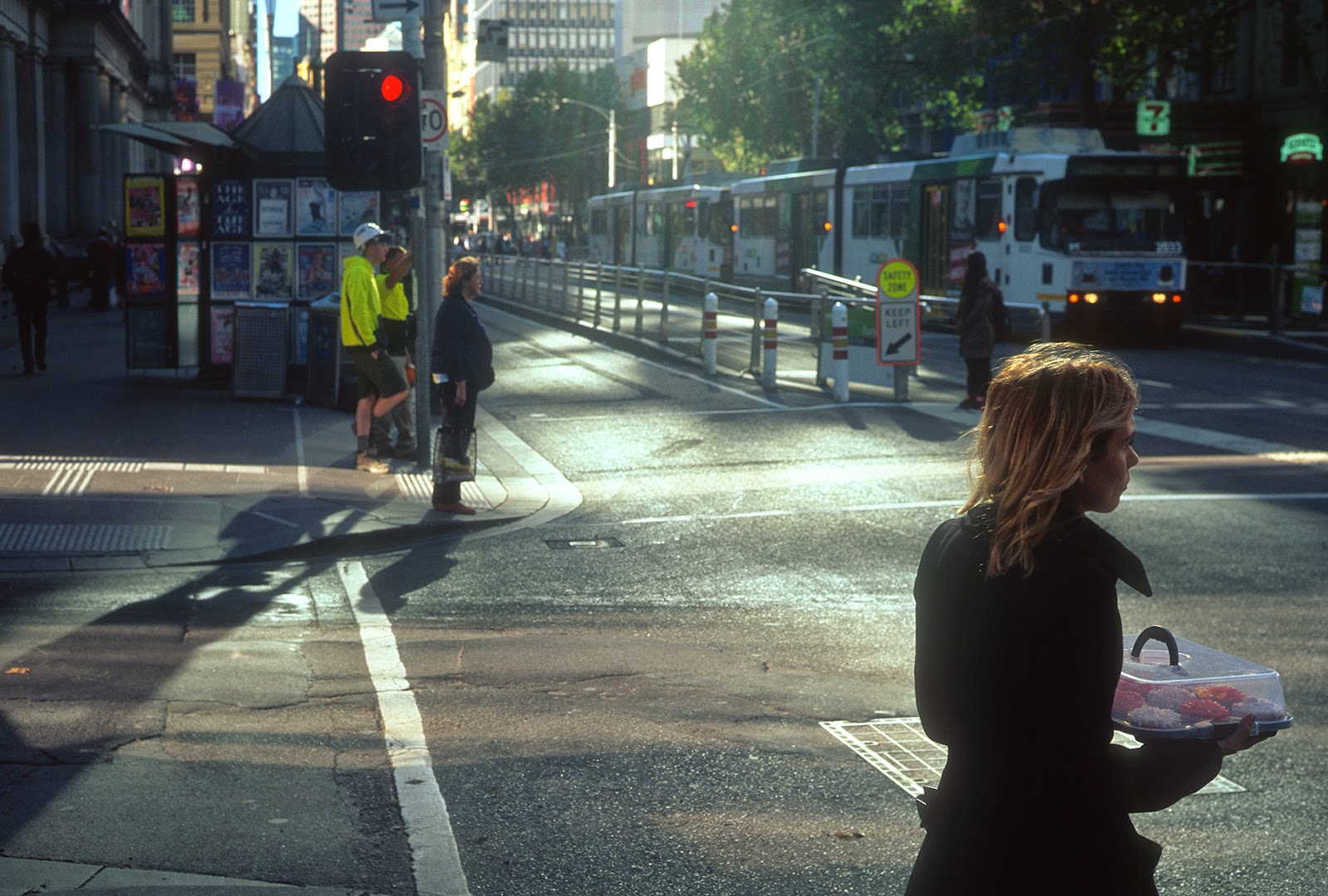
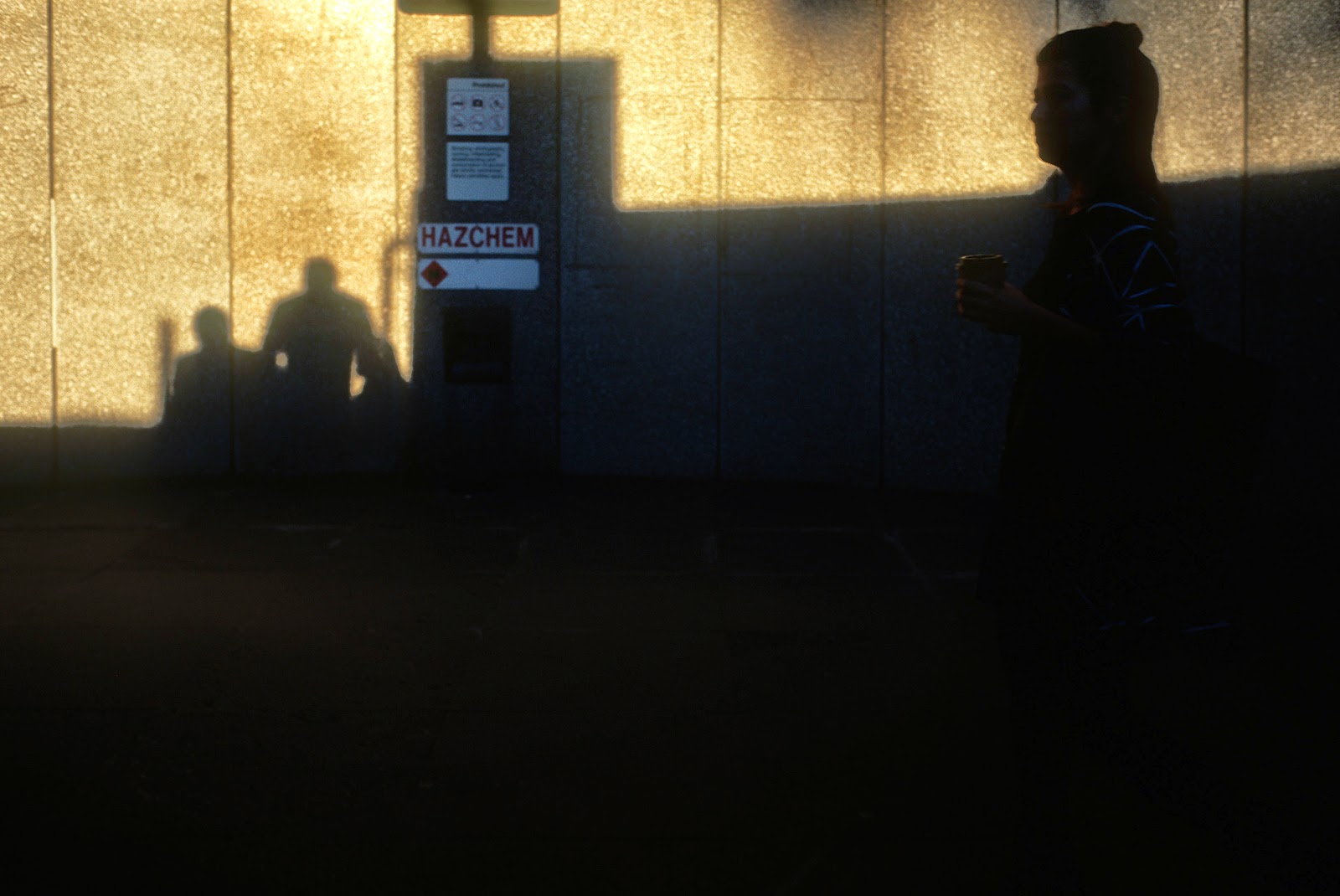
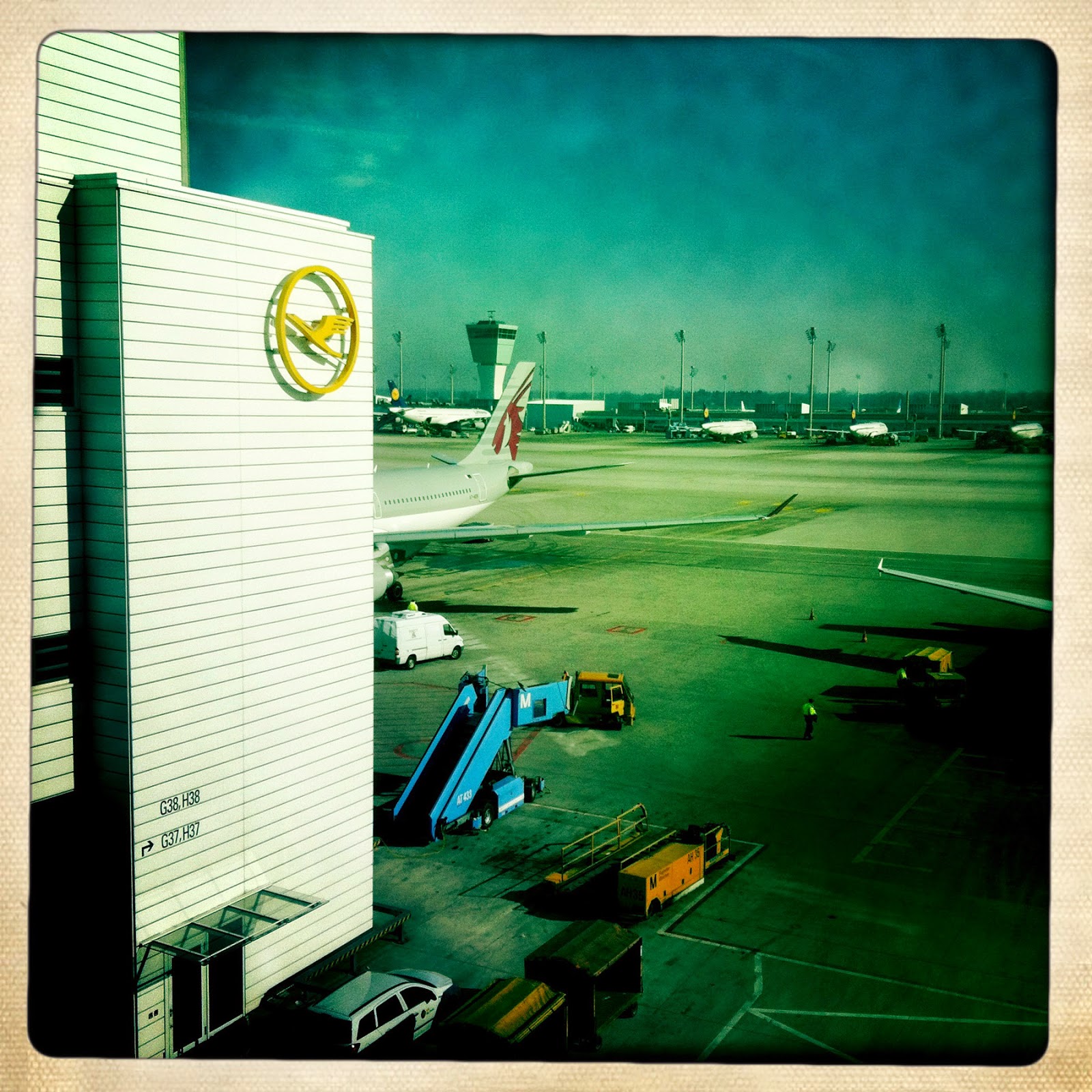
The humble images below are an example of that effect - the top one keeps on getting "liked" and "reposted". Is it any marker or quality? Nope. The other two I also like, but they have not reached the same number of  "likes" or "reposts". Why? Meh. Who cares.

I realise I'm not exactly in the stratospheric of interweb popularity (and I write this blog mainly for the gratification of hearing my mechanical keyboard clatter), but it does raise an interesting point. Is popularity a decent measure of anything? Why is it that so many artists, musicians, writers etc complain their most popular or well known work is far from their best? 

Would (insert famous pre-internet artist/celebrity here) have been a success today? What happens if the next Beatles were out there right now but decided against using YouTube? Does that mean Justin Bieber has subsumed the next Beatles? Or is this sophomoric and ultimately unknowable line of questioning like a 1960s op-ed writer asking "would the Beatles have been a success if they had decided against using electricity?". Perhaps. Maybe.

Melbourne Street by Richard McKenzie, Leica M4 Summicron-M 50mm Dual Range Fujifilm Velvia 50


Parliament Station by Richard McKenzie, Leica M4 Summicron-M 50mm Dual Range Fujifilm Velvia 50


Erstwhile Camera House by Richard McKenzie, Leica M4 Summicron-M 35mm Agfa Vista 400

Saturday, 10 May 2014

Myopia


I was waiting at Munich airport for my flight back home with a few Euro burning a hole in my pocket. It was early 2012 and I had just caught up on the news that Kevin Rudd had resigned as Foreign Minister, precipitating his first and ultimately unsuccessful attempt to return to the leadership of the Labor Party.

While the politics student in me found it all terribly exciting, I wasn't looking forward to leaving the civilisation and culture of wintry Europe and returning home to the oppressive summer heat of 'Straya (South Bali...or is Bali Far (Far) North West Queensland?).

With time to kill, I wandered into one of the generously-stocked news shops, yearning for Lucky Strikes and some reading material (in that order). There is nothing like the dual cravings of nicotine and intellectual sustenance. It's a craving only satisfied in Europe and best fulfilled at the airport or train station. Being a conceited international traveller, I was drawn to the closest issue of the Monocle through my own inflated sense of worth.

But there was more to it than snobbery. In front of me, in black, white and yellow was Issue 51 of Monocle Magazine with the cover stories "I will call Australia home: A superpower in the South Pacific", and "Aussie Rules". How could I, a reluctant Australian cum conceited international traveller and airport lounge hanger, not purchase a Monocle that put my birth country on the cover?

The answer of course is that I could not not purchase one. Or cigarettes. And besides, there is nothing an Australian loves more than to read the opinion pieces of foreign journalists writing about Australia, quoting Australians, refracted through the prism of international editors, beamed back to us via television or print.

I bought my Monocle and made haste for the New York terrace-inspired indoor smoking lounge (sponsored by British American Tobacco). The shit they still do in Europe. As the ventilation system hummed and hazy, recycled air made its way around the idealised wallpaper skyline of New York, I read with great interest what those lords of high culture at the Monocle had to say about my favourite arse end of the earth.

Look! There was an interview with "Foreign Minister Kevin Rudd" who explained how it came to pass that he got dumped as Prime Minister (which is sort of like a President or something), but was a "happy little Vegemite" as Minister for Foreign Affairs. Wow. What a difference a day made.

There was discussion about Melbourne's coffee and Sydney's harbour (don't mention the war), but most intriguing was the cover story about the "superpower in the South Pacific". I read not because I desired a mid-tier nuclear deterrent for Australia, but how the Monocle would approach the notion of a laid-back, antipodean "superpower".

The article made the point that most of Australia's diplomatic clout is soft power; that the most internationally-recognised Australian ambassadors were its entertainers and sports stars. It discussed how Australia should re-shape its Department of Foreign Affairs to re-focus its soft power to help it act, as is so frequently said, as a "creative middle power". Forget military power, spread democratic values and good old-fashioned hard rock instead. Music to my ears.

Soft power is, of course, incredibly important in diplomacy. It can basically be defined as making someone do something they don't want to do without the threat of force. Britain and Germany have been practising it for decades, China a more recent addition, spending millions building infrastructure in Africa.

But what stuck in my mind was the article's views on the Australia Network. Instead of discussing the probity of the Australia Network tender (as was the style at the time), the Monocle thought it outrageous that the government would even contemplate putting the international broadcaster into private hands.

A broadcaster such as the Australia Network is, for many of our regional neighbours, the voice of Australia, whether it's through rebroadcasts of Home and Away and Blue Heelers, or via the ABC's first-rate news and current affairs. The network was right at the core of the soft power play that would see Australia's influence in the region rise not through military force, but through mutual co-operation and understanding.

Now, to a foreign policy realists and neorealists, all this might sound like a bit of fluff. But to a country like Australia with a small population and limited military resources, it is one of the most practical ways to achieve a place at the table in our region. Countries around the world expend a lot of time, money and effort exercising soft power in their own regions and beyond.

Unfortunately, while other countries have been increasing their spending on "soft" diplomatic issues, Australia has been busy insulating itself from the outside world closing foreign posts, turning boats around, spying on our neighbours and thumbing our noses at the international community.

The Committee of Audit's recommendation to shut down the Australia Network is yet another blow to Australian regional relations at a time when we should be advancing, not retreating from the region. Our neighbours already view us with suspicion and skepticism, what kind of signal is turning off Australia's transmitters into Asia supposed to send? Well, nothing. Nothing but static.

It seems odd that this government finds millions of dollars to spend on international advertising campaigns designed to frighten people from getting on boats and coming to Australia, but can't be arsed spending a few measly bucks to send a positive message of Australia to our regional neighbours. Then again, this all might just be part of the plan to make Australia look as unfriendly and unwelcoming as possible for those who might attempt that "perilous" journey across the seas we sometimes sing of in the second verse of our national anthem. Perhaps the government should just start broadcasting episodes of Game of Thrones or Hannibal into Asia and call them "Australian reality TV". 

It is understood some in the government think the Australia Network's AM, FM and television broadcasts can be replaced with increased streaming of ABC News 24. This is impossible both in theory and practice. For one, much of the material the ABC re-broadcasts from BBC and Al Jazeera is licences for Australian broadcast only - the costs of expanding that licence would surely conflict with the Abbott government's desire to cut until bled dry.

Secondly, if anyone in the government had actually visited our regional neighbours, they would know that in the isolated highlands of Papua New Guinea, for instance, there is only one radio and a supply of Size D batteries between a village of 40 or 50 people. This is their link to the outside world short of hiking four hours to the nearest regional centre. There is no electricity and there sure as hell isn't any internet.

Thankfully the horror of an Abbott government was unknown to me, sitting in the smoking lounge of Munich airport in 2012. But with the Labor Party then continuing its exercise in navel gazing, it's hardly surprising we find ourselves with a government intent on making issues of humanity and conscience into crises to be exploited for electoral gain. Or that we have a government myopically committed to cutting, cutting and cutting some more, cost to the nation's heart and soul be damned. Or that we have a government completely disinterested in the world around it, except where trade deals can be done or administration of human dignity offshored to the lowest bidder.

Comparing today's Australia to the faux New York rooftop-inspired smoking lounge sponsored by British American Tobacco, I think it's pretty clear which one has less of a stench about it.

Friday, 25 April 2014

"Das wesentliche"


"The essential" is how Dr. Andreas Kaufmann, chairman of the supervisory board of Leica Camera AG describes the new Leica T Typ 701. After the marketing disaster of the Leica X Vario (which I wrote about last year), Leica made sure not to raise expectations of a "Mini M" or in fact anything like an M rangefinder with their new mirrorless camera.

And that is the right move to make. While the minimalist design of the Leica T fits the German company's historic gestalt, this new camera is arguably the first all-new minimal design the company has made. With the M-series bound strictly to its roots, the X-series to a standard digital camera design and the S-series to a non-mass market, the Leica T has the potential to transform digital camera design in the same way the M3 did to 35mm camera design.

First is its manufacturing process, as detailed here. It is "unibody" just like a MacBook Pro - perhaps this is the camera Apple would make if it were to ressurrect its QuickTake line under Jony Ive - milled from a single block of aluminium, then hand-polished for 45 minutes. You can see the polishing in real-time here.

Now, it may be a while before we see an Olympus or Sony mirrorless camera constructed in the same way, but it does put the possibility out there for a Jony Ive-spired design from Japan at some point in the future.

The Leica T's sleek lines and minimal controls renounce entirely the retrofied designs of mirrorless competitors such as Fujifilm and Olympus (not without irony as it had been noted that Fujifilm's X100 out-Leica'd Leica). This is a great decision, after all if Leica (with Audi Design) had produced a camera that looked like a shrunken M, what would be the point? Leica would be accused of aping Fuji (who in turned had aped Leica) at three times the price. No, Leica's new design breathes life not only into Leica but into the camera design world more generally.

But bigger than the looks is the thing that's on the back of the Leica T Typ 701: a 3.7" LCD Touch Screen. Yes, this is the least shit LCD ever put on a Leica camera. In fact, you might even call it the best, although I hesitate to use such a word when describing Leica's choices in LCDs. Leica is the company that co-invented the 35mm film format, perfected the rangefinder and engineered lenses of perfection. They have now turned their sights to a touch LCD interface - this is either going to be the best thing ever, or terrible and fail miserably. I have a strong feeling it won't be the latter, at least not according to initial reviews.

No Asian camera manufacturer has engineered a touch interface that makes any sense. No Asian camera manufacturer has designed a digital camera interface that makes any sense. The Japanese camera giants have been making the same, terrible cameras for years and hoping their extremely good sensors and electronics would tide them over. Not any more. This is Leica's chance to influence the world of camera design again, by creating a usable touch interface that isn't too far removed from an iOS home screen. Clean, sensible and lots of gradients German. I can't wait to have a play.

The Leica T seems to be all about quality, style and usability. It's also the first new Leica camera in almost 30 years to proudly display "Leica Camera Wetzlar". As with other Leica products, this camera is built and finished superbly, but does not break new ground in its specifications. A 16 megapixel APS-C mirrorless camera can be had for less than $500, but that's not the point. If you were worried about price, you wouldn't have been waiting for Leica's foray into the compact system camera world.

That said, I do find the price the most disappointing feature: AUD$2,300 for the body only, $2,300 for the 18-56mm zoom lens and $2,500 for the 23mm Summicron-T. No, I'm not going to delve into DPReview-style luxury loathing, but to me this is the camera that says Leica has their eyes on joining Cartier and Rolex.

Although Leica's products have always been expensive, the quality of the products coming from the major camera manufacturers is at such a high level now that, given a blind test, you would be struggling to tell whether an image was made with $1000 DSLR kit or a $50,000 medium format kit. Camera businesses are no longer concerned about image quality, but about survival in the smartphone era. Leica has identified one way to survive as making "premium" products and selling them to the wealthy in the west and the burgeoning super elite in China.


Perhaps, as a Leica user, it is sacrilege to say that there is little for an aspiring photographer to see in a Leica that they can't see in a Fujifilm X or a Sony A7. Where, for instance, a Leica M4 offered a size advantage at a price premium over a Nikon F3 in its day, today's mirrorless cameras offer amazing quality at a fraction of the Leica price. Where generations of aspiring photographers were rightly inspired by the workhorse Leica M and its famous users, today's Leica is much more a glitzy piece of extraordinarily well-engineered shoulder candy than photo workhorse.

In an interesting hypothetical, the Online Photographer asked what camera famous photographers of the 20th century would be using if they were alive today. Henri Cartier-Bresson, the post reasoned, would be shooting a Nikon V1 with the 18.5mm lens; Garry Winogrand, a reader argued, a Ricoh GR. Yep, it's hard to see a rarefied photojournalist these days using a Leica for anything but a bit of fun - "personal" work, they usually call it. It's even harder to imagine Robert Capa swimming ashore at Normandy with a Leica T Typ 701 with T-Snap and co-ordinated T-Flap. At least the resulting images, assuming the camera survived, wouldn't have been irreparably damaged in processing.

But I am bashing a straw man. This isn't your granddaddy's Leica. The T Typ 701 is a very latter-day Leica product - outside the box and somewhat contrarian. It'll no doubt be the first in a line of T bodies, perhaps one a bit more like a Leica M will be released at some point, built-in EVF etc. There will inevitably be many critics, but who cares about them? Leica certainly doesn't. And when you're Leica, why should you?

ANZAC Day

Bill Shorten and Paul Keating at Australian War Memorial Remembrance Day Ceremonies, 2013 Source: SMH
"...within Australia we were moving through the processes of our federation to new ideas of ourselves. Notions of equality and fairness – suffrage for women, a universal living wage, support in old age, a sense of inclusive patriotism … Australia was never in need of any redemption at Gallipoli, any more than it was in need of one 30 years later at Kokoda. There was nothing missing in our young nation or our idea of it that required the martial baptism of a European cataclysm to legitimise us."
Paul Keating, Remembrance Day 2013
ANZAC Day has become a day irrevocably bound up in uncritical myth and legend. Like a religious holiday, the same stories are told and re-told, changing subtly from year to year, altering in our imagination until all that's left is some vague notion of what we think may have happened.

Take that unimpeachable symbol of Aussie "spirit" and "mateship", Simpson and his Donkey. The average Australian can probably tell you a few things about him: he was serving at Gallipoli and ferried wounded soldiers from danger back to safety; he probably should have been awarded the Victoria Cross, but didn't - probably because of the British in charge at Gallipoli or something. I don't know, I haven't seen the movie in a while.

A commissioned officer in John Howard's Culture Wars, education minister Brendan Nelson told Australian schools to teach the "Australian values" such as those espoused by Simpson and the Donkey or else: "if people don't want to be Australians and they don't want to live by Australian values and understand them, well then they can basically clear off."

This, of course was aimed at schools who dared to teach Islamic tradition or anything else culturally unsavoury to that band of old, privileged white men in government from 1996–2007. Howard had said he was prepared to "get inside" mosques and schools to make sure they weren't creating the next band of extremism.

With a little bit of intellectual curiosity, Nelson would have see the folly of his idea - Simpson deserted the merchant navy before opportunistically signing up as a stretcher bearer as means of getting back home to England. He wanted to get away from Australia, a country he was growing "tired" of. He was also an active trade unionist. While he performed his job admirably in Gallipoli, rescuing soldiers with a donkey got him out of the more dangerous stretcher-bearing routes where many men died ferrying the wounded back to safety. He was fatally wounded on one of these trips.

Propaganda publications like the Glorious Deeds of Australiasians in the Great War painted an image of untold glories that were swallowed whole by an Australian public in need of good news from the front. Like the stories of the Bible, the myths of ANZAC were spoken, re-spoken, collected and published. The myths, set in print, then became fact, rarely to be critically analysed again.

Until today, where there is a small, but growing movement contrary to the reinvigorated Howard-brand ANZAC festival. While it is incredibly important to remember those who have died in the service of our country, it is even more important to place that in a context.

Why? Where? When? How?

The day before ANZAC soldiers landed at Gallipoli, Ottoman authorities rounded up 250 Armenian intellectuals and community leaders and deported them. Most of them would later be killed. Thus began the Armenian Genocide, still denied by Turkey to this day, resulting is some 1-1.5 million deaths. An unabashed and unknown (in Australia anyway) act of inhuman savagery.

At Gallipoli, almost 11,500 Australian and New Zealand troops died. Some 21,000 British troops suffered the same fate. While the impact of the Great War can't be understated in its affect on two fledging antipodean countries, it is time to move beyond symbols and myths to something more nuanced and dignified.