Friday, 25 April 2014

On Hereditary Monarchy by Thomas Paine


"To the evil of monarchy we have added that of hereditary succession; and as the first is a degradation and lessening of ourselves, so the second, claimed as a matter of right, is an insult and an imposition on posterity. For all men being originally equals, no one by birth could have a right to set up his own family in perpetual preference to all others for ever, and though himself might deserve some decent degree of honours of his contemporaries, yet his descendants might be far too unworthy to inherit them. One of the strongest natural proofs of the folly of hereditary right in kings, is, that nature disapproves it, otherwise, she would not so frequently turn it into ridicule by giving mankind an ass for a lion."

Thomas Paine, Common Sense (1776)

This guy will at some point be the King of Australia without any job interview, any assessment for the suitability of the job to be the notional and actual head of state of this country. No, Sir Peter is only an asinine representative able to abrogate the democratic checks of this country.

As Paine points out, hereditary monarchy makes as much sense as an hereditary brain surgeon or rocket scientist. Last time I checked, Werner von Braun got his job through sometimes firing hitting England with rockets, not being born to a supreme rocket maker.

It is supremely undemocratic and an embarrassment in this alleged enlightened age. If Malcolm Turnbull wasn't so busy fucking up the broadband internet in this country for the next generations, then we could probably count on him to do something about this constitutional malaise.

What a joke.

Sunday, 20 April 2014

Leica Summicron 50mm Flare Test Review Unboxing Video

Leica Leitz Summicron M 50mm Dual Range Flare Test ReviewHave you ever wondered what would happen if you pointed your 55 year-old lens at the sun? Well, wonder no more. The Leitz Summicron 50mm with near-focusing range is incredibly resistant to flare.

Its resistance to flare is even more obvious when coupled with high-contrast, high-saturation reversal film such as Fujifilm Velvia 50 (RVP50), as demonstrated in the attached photographs. If you can hear yourself over the screams of Walter Mandler, then I highly recommend giving it a shot.

Preferably you should go back in time to steal Steve McCurry's Nikon F6 loaded with the last ever roll of Kodachrome, place the drive mode in C, point the camera at the sun and hold down the shutter button. If this is not possible, just use the most expensive slide film you can find.

Leica Leitz Summicron M 50mm Dual Range Flare Test Review with Fujifilm Velvia 50

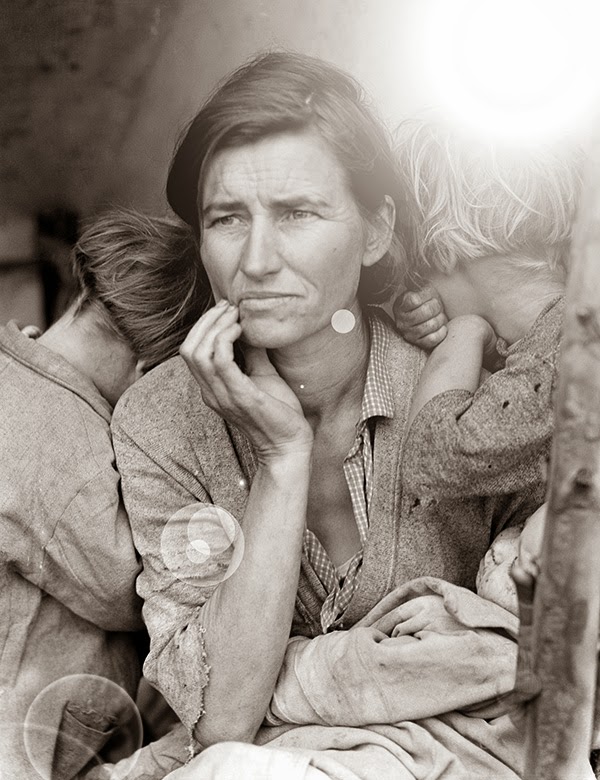
It is truly a thing of beauty. Now I know how JJ Abrams felt when he invented the lens flare AND the television serial. There should be no need ever to want anything less than total flarage. In fact, it is possible a number of improvements* could be made to existing photographs.

Migrant Mother Special Edition by Dorothea Lange and Richard McKenzie Behind the Gare Saint Lazare Special Edition by Henri Cartier-Bresson and Richard McKenzie

*Sincere apologies to Dorothea Lange, Henri Cartier-Bresson and Steve McCurry.

Saturday, 19 April 2014

Slow Burn on Fast Fashion (Part II)

H&M probably spends more money on diplomacy than DFAT does. The charm offensive from the Swedish clothing giant was in full-swing in the weeks leading up to the debut of their flagship Melbourne store.

"This is a very special opening for us," said head of design Ann-Sofie Johansson. Because there is nothing Australians like more than feeling important on the international stage, like other countries are paying attention to us. 

Neither is there anything more Australian than to enlarge things beyond any reasonable need. While our European friends make do with smaller houses, cities and H&M stores, the first Australian store is a behemoth. One of the biggest in the world, Johansson proudly told us.

But there is a darker side to the fast fashion so exactingly merchandised by H&M.

The retailer, whose Chairman has a personal wealth of USD$28 billion, has "committed" to paying the employees of its suppliers in Bangladesh and elsewhere a "living wage" by 2018. They've even made a lovely little graphical "roadmap" demonstrating their commitment.

To be fair, H&M was one of the first retailers to support change in the wake of the Rana Plaza disaster, signing the safety accord very quickly. But the shadow of fast fashion looms large, begging the question why it took the death of 1,129 Bangladeshis to have an accord for a "living wage" in the first place. The current wage system can best be described as neither living or dead - an un-dead zombie wage if you will.

This is nothing new. Very few consumer products can be purchased where someone somewhere in the production chain has not been exploited. One need only mention names such as Foxconn, Nike or even home-town sports ball manufacturer Sherrin for cases of child labour and worker exploitation.

Cheap labour is integral to many of the products we use daily, including the computer I am typing this on (the keyboard a notable exception, Made in USA). It is also an extraordinarily complex issue with massive ramifications for both developed world consumers and developing world workers.


Looking at the queue of mainly teenage and twenty-something girls queuing rain, hail and/or shine around the GPO, it's easy to understand why consumers ignore or forget the issues of a living wage. After all, if we don't really give a stuff about our own people living on the poverty line, why the hell would we care for them foreigners? 

Less forgivable is the cheer-leading "journalism" from the city's major chronicles. The Age has given page after page of gushing copy over the course of days covering the H&M's Melbourne opening, much of it reading like an H&M press release. I didn't catch what 150 2-3 syllable words the Herald Sun was using to describe the opening. They were probably no less effusive, if a little more elementary.

Even that online and sometimes-print publication Broadsheet (whose notional raison d'être is the independent designers and fashionistas of Melbourne) gushed uncritically:
The old GPO, once home to small retailers, has been transformed into a single store, 5000 square metres in size, from which H&M will sell its wares...Two enormous floors of wall-to-wall clothing, cosmetics and homewares are on offer, ensuring Melbourne will have the full H&M range at its fingertips.
What happened to those "small retailers" who used to retail their own range in the GPO? Dunt know. Dunt care.

It was left up to those un-Australian "latter-day Trotskyite" traitors at the ABC to raise concerns about "fast fashion", albeit in the context of the competition to local retailers rather than the social impacts of an un-dead wage. Still, a little bit of questioning is better than the manicured press releases everyone else produced.

Damn. Why do those latte-swilling inner-city elites always take everyone else's side except Australia's?

Slow Burn on Fast Fashion (Part I)


It was an unexpected conversation. There I was standing before the soon-to-opened Australian high-temple to fast fashion, giant electronic imitation antique clocks counting down the hours, minutes and seconds until H&M opened their first local store. I had my camera in hand and snapped off a few shots when the customer service gentleman from the Bourke Street tram stop approached me.

"It's pretty crazy," he said. I let out a non-committal "hmmm" and formed the awkward smile when I haven't prepared my face to smile. I looked at the crowds passing by, the VIP railings being set up for opening night, demarcating the special from the plebs.

"It's just a shop," he continued, "in a month's time it will be forgotten about and the next thing will come along."

"It'll be sooner that that," I said, "the Emporium opens up in less than two weeks." Sometimes I wonder whether I actually say the things I say. This guy had the benefit of hours standing in front of fast fashion ground zero and he was going to say his piece, regardless of my additions or intentions.

"Sure, it's made a few more jobs, but it's all so cheap. What about the people who make these clothes? How to they make a shirt for $6?"

I followed up with a slightly more committal "Yeah, well..."

"And soon they'll want to stay open for longer. Myer wants to do 24 hour trading. I mean, what will that do to families? The workers? All the other shops will have to stay open longer just to compete, but they won't want to pay the proper rates."

Ah, retail! I know about retail, I'm in retail! "Yep, that's retail," I said, "Adapt and survive. I've been in retail for seven years and..."

"My wife's been in retail for 35 years," tram man said, "Thirty-five years. And for all the governement's opening up trade and Workchoices and all this other hot air, has it made out lives any easier? No."

Ooh...politics! I majored in politics. Maybe I can contribute to this debate, "Yeah, retail workers always get shafted..."

"And they STILL want to cut their wages. What, so they can work at 1am for the same wage as 9-5? I don't think so."

We were certainly in agreement at this point. "I completely agree," I began, "Look, I gotta head back to work, but it's been nice chatting with you."

"Oh, sure. You too. See ya."

Emporium Melbourne: Unboxing Video First Look Exclusive


Emporium Melbourne: it's a shopping centre. Like many other similar such outposts, it is a place where people with or without money congregate to pass the time by looking at shit they don't need while scrolling through an endless stream of inconsequential minutiae on their smartphones. What's that? A break in the visual stimuli of life? Swipe to unlock.

These centres'  corporate owners loftily claim them as the modern inheritor of the Habermasean public sphere where people can come, meet socialise and engage with the world. But they are almost all privately owned and impose severe restrictions on individual activities while reserving the right to data mine patrons because marketing. Time will tell how restrictive Emporium will be.

Local media has largely swallowed the Emporium Kool-Aid. Broadsheet, a local publication that has misplaced the Auto Levels command on Photoshop, has effused breathless enthusiasm for Emporium's "graceful walkways" and its "plush, experience-focussed shopping". Whatever that means.

Of opening day, they reported that "anxious queues" were lined up outside well beforehand. Funny, at 8am, all I saw was this:

While Broadsheet reported "anxious queues" at 9am, this is all there was at 8am. 
All this reporting felt rather odd for a publication whose notional raison d'être is local independent fashion and design that is probably most likely to suffer with the onslaught of Uniqlo and H&M. But as Broadsheet says, it isn't excited about "breathless and imprecise hyperbole", just what makes Melbourne great.

Naturally, News Limited gave the same glowing endorsement to the centre, as did the commercial news networks and poor old modern-day Fairfax. A rough count of opening patrons would've probably seen media outnumber consumers 2-to-1.


Despite its light architecture and drummed-up publicity, Emporium Melbourne is just the same as every other shopping centre ever. Except the ones in the United States which have roller coasters and waterslides. I want one of those.

Being the opening day, the wired goons (rent-a-cops with earpieces and ill-fitting suits that seem to be all the rage) would have been loathe to heavy people with cameras, so for the first time in shopping centre, I felt liberated to take a few snaps.

I was not approached by wired goons or thrown out, but I assume once all the enforced happiness dies down, they will be less amenable to camera-toting terrorists like myself taking photos of things that do not have any reason to be photographed because privacy, 9/11 and not allowed.

If the attitudes towards photography at other shopping centres in Colonial First State's portfolio are replicated at Emporium, I'd recommend my fellow photographers to get out and take some pics now while the goodwill is still there.


This shopping centre is very vertical. Unlike the concrete paddocks of Doncaster and Chadstone, there is a lot of height to Emporium. Some of the space is light and airy. Others, like the food court - sorry, bespoke laneway-inspired food truck café gourmet lounge - are strangely dark.

There were "concierge" staff everywhere, under 25s dressed like bellhops from a Wes Anderson film that had desaturated in Da Vinci Resolve.


A great number of stores stand empty with only chipboard partitions and oversized models looking off into middle-distance indicating any future presence. Opening day (I visited around 2:30pm) was rather quiet. Sure, heaps of people were lining up for gratis bespoke burritos, but many shop employees stood gazing through their glass retail prisons wondering if some consumer love might come their way.

People waltzed around, confused by the little things, like turning the wrong way from escalators and lifts. Familiarity was yet to breed contempt in them. Others, like me, went entirely the wrong way, got boxed in by construction areas, looked at their watches, turned around and continued walking like we were meant to do that. Suave.


Being a new space, it's quite easy to get lost in. It also feels quite claustrophobic in the sense that there is no easy exit to Elizabeth Street owing to that godawful Somerset Apartments building on the corner of Lonsdale and Elizabeth. But hopefully the new Strand Arcade redevelopment (don't forget Nant Whisky in there too!) will improve accessibility.

For all these shopping centres' claims to being the next "experience", there is very little to differentiate them from any number of other shopping centres around the city, the country or the world. Why do people visit shopping centres? Is it for the "experience"? Is it because it's an "essential shopping landmark"? Or perhaps it's because some shopping centres "quickly establish a leadership position thanks to [their] unique architecture, premium ambiance, retail mix and innovative shopper services"? No. It's because people sometimes want to buy shit. And they keep on coming back to do so.

If you don't get it yet, I'm not a great fan of shopping centres. Criticisms of consumerism aside, I dislike their ownership of the modern "public" space and their usually bland "me-too" designs. At least this one looks a little bit different, but let's not kid ourselves. It still just a shopping centre.


Emporium Melbourne is not an "experience", it is an overinflated piece of façadist architecture that brings little, except moar shops, escalators and over-zealous, CCTV-driven security guards to the CBD.

This is not an entirely bad thing if it means suburbanites are drawn into the city, where there's good food, good cafés and good culture, and away from their lifeless asphalt arenas they call "shopping centres", but I won't hold my breath.

Ultimately, the muted buzz will die down, perhaps even before the Baz Luhrman choreographed paycheck opening night affair in August. Then it will be like none of this ever happened until news of the next "redevelopment" appears, tearing down more buildings for more shops, apartments and synergies of complete premium experience.

Until then, if you're bored, remember you don't have to go shopping.

I give this shopping centre 170 out of 250 open shops.

Coming Soon
Layers of confusion

More life inside or outside the window?
I, Robot was not a good film, but its CG stars appear to make wonderful Uniqlo models
EmBOREium

Wednesday, 9 April 2014

Turgid Text Tuesday 2

Turgid Text Tuesday (which may or may not appear on a Tuesday) is a semi-regular post which looks at some great examples of terrible language.

They are mainly found in corporate and governmental reports and documents.


"Walsh Bay Arts Precinct Master Plan"
Public Works, Government Architect's Office (PDF Download)

Ah, the yarts. How civilised. How cultural. How jargon. 

This document is really the example of how to write a master plan in today's activated and celebrated world. Each paragraph feels like a restatement of the previous one in increasingly florid and impenetrable language:

  • "optimal distribution of arts and cultural facilities"
  • "world class...precinct"
  • "diversity of...venues"
  • "maximise shared facilities"
  • "Establish a variety of cultural experiences"
  • "Facilitate synergies between a variety of cultural organisations" (my personal preferred tenderer)

Translation: the bottom line here is that they want to build one kick-arse arts precinct that contains all the arts.

Let's leave to one side the argument that arts precincts are pretty dismal pieces of policy and may become ghettos and let's look at the document-proper.

It's the mark of modern corporate-speak that the actual thing you are talking about be as far removed from the words you are saying or typing, lest the common people actually think you know or care about that which you are talking or typing about.

One might call it obfuscatory impartiality (moving forward). Use the same language regardless of whether one is talking about a declaration of war, electricity prices, council waste collections or arts precinct master plans.

In this horrid document, the various sections are headed with amorphisms such as scope, vision, achieving the vision. opportunities and masterplan principles.

Naturally, achieving the vision will require:
"A vibrant mix of commercial and artistic uses to rejuvenate the precinct and balance artistic with commercial imperatives...adaptation and celebration of the architectural heritage of the wharves...engagement...high-quality public domain and a business model that delivers precinct activation and efficiencies of co-location."
Of course, this is exactly what was going through the minds of the Dutch when they founded the Rijksmuseum.

Tuesday, 1 April 2014

Turgid Text Tuesday 1

Here begins a semi-regular display of print screens of PDFs found on corporate and governmental websites.

They may include use of horrid jargon, asinine buzzwords or superfluous graphical flourishes. 

They are all awful.


"Point Nepean Forts Conservation Management Plan"
Parks Victoria, 2006 (PDF download)

It is understandable why historic national structures such as the fortifications of Point Nepean require conservation. What is not so clear is what the fuck that flowchart is doing there. What is it? Where did it come from? What does it do?


Why are there arrows? Do the management plans consult with one another? Obviously not as the Point Nepean Forts Conservation Management Plan doesn't have an arrow between it and the other three plans, just the one bidirectional graphical pointing device towards (and from) the overarching management plan.

This seems inefficient. If I were the South Channel Fort Conservation Management Plan, for instance, I could not share my outcome by engaging with key stakeholders of the Point Nepean Forts Conversation Management Plan. I would have to go through the Point Nepean National Park and Point Nepean Quarantine Station Draft Management Plan in order to talk to the Point Nepean Forts Conservation Management Plan.

And how would I know, as the South Channel Fort Conservations Management Plan, if my message had been passed on in full, verbatim as it were? The bottom line is that I wouldn't. I would have to trust my hierarchical and graphical superior that the my message was passed on promptly and efficiently.

The next question is obvious: what do the bidirectional graphical pointing devices mean? Why are their lengths different from one another? Was the Point Nepean Forts Conservation Management Plan not important enough to be completed by someone with competence in bidirectional graphical pointing devices palette in Word '97?

Of course all this is moot. I am reliably informed that none of the draft or final plans mentioned in the post have the capability of speech or even of sentence sentience. Never mind.

Best regards.